Photographs don’t just capture moments—they preserve diplomacy, cultural exchange, and the evolution of international relationships. As King Charles III prepares for his state visit to the United States, images of past royal tours resurface, telling a visual story of how the British monarchy has shaped and reflected Anglo-American relations for over a century.
These visits are more than ceremonial pageantry. They’re strategic moments where soft power meets statecraft, where handshakes echo treaties, and where shared heritage is both celebrated and scrutinized. Through the lens of history, the photos of British royals on American soil reveal shifting public perceptions, evolving media dynamics, and the delicate balancing act of maintaining a modern monarchy in a democratic world.
The First Steps: Edward VIII and the Birth of Royal Media Diplomacy
Long before televised state dinners and Instagram coverage, the first high-profile royal visit to the U.S. set a precedent—though not by a reigning monarch.
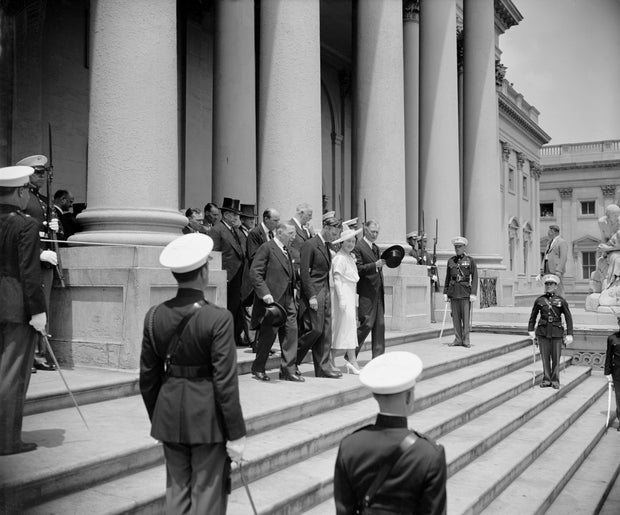
In 1919, Prince Edward, the future Edward VIII, toured the United States as part of a post-World War I goodwill mission. Photographs from that trip show a young prince in uniform, shaking hands with soldiers, touring factories, and attending baseball games. These images were widely circulated in newspapers across both nations, marking one of the earliest uses of royal visibility as a peace-building tool.
What stands out in the photos isn’t just Edward’s approachability—it’s the contrast between the rigid formality of royal tradition and the informality of American culture. In one iconic shot, Edward is seen tipping his hat to a crowd of New Yorkers from the back of a convertible, a gesture that felt personal in an era when monarchs were often distant figures.
But the visit also revealed early tensions. Some Americans viewed the royal presence with suspicion, a remnant of revolutionary sentiment. Others embraced the spectacle. The photographs from that trip, now archived in libraries and newsrooms, serve as a visual bridge between empires and democracies learning to coexist.
Queen Elizabeth II: The Defining Reign in U.S. Royal Relations
No royal has visited the United States more than Queen Elizabeth II. Her six official state visits, spanning from 1957 to 2007, offer the richest photographic record of royal engagement with American life.
Her first visit in 1957, just five years into her reign, was pivotal. Arriving at Washington National Airport with Prince Philip, the young queen was photographed addressing a joint session of Congress—the first British monarch ever to do so. The image of her standing at the podium, composed and articulate, helped redefine the monarchy for a modern, media-savvy world.
Over the decades, photos from her visits reveal a monarch adapting. In 1976, during America’s bicentennial celebrations, she was photographed sailing the Chesapeake Bay in a 1775-style naval vessel—a symbolic gesture softening historical rifts. In 1991, during the Gulf War, she visited wounded U.S. soldiers in Bethesda, her quiet empathy captured in close-up shots that circulated globally.
Even mundane moments became iconic: - Sipping Coca-Cola at a barbecue in Texas - Riding in a golf cart through the White House lawn - Dancing (briefly and awkwardly) with President Reagan
These images weren’t accidental. They were carefully choreographed moments of cultural alignment, showing the queen as both sovereign and citizen of a shared global moment.
Why These Photos Still Resonate
:max_bytes(150000):strip_icc():focal(728x275:730x277)/princess-catherine-prince-william-donald-trump-king-charles-iii-trump-state-visit-uk-windsor-091725-8672599a27214b6f8ffdbb07fd7596e4.jpg)
The enduring power of Queen Elizabeth’s U.S. visit photos lies in their authenticity. Despite the pageantry, many shots capture unscripted warmth—like her laughter during a 2007 tour of Congress or her quiet conversation with President Obama in the White House Rose Garden. In an age increasingly skeptical of inherited power, these moments humanized the monarchy.
For historians and journalists, the photo archive of her visits is a primary source of diplomatic tone. When relations were strained—after the Suez Crisis, during debates over Iraq—the warmth of royal visits often helped reset the conversation.
Prince Charles Before the Crown: Building a Legacy
Long before he became king, Charles made his mark through multiple visits to the U.S., each carefully shaped by both public service and controversy.
His first solo trip in 1970, at age 21, included stops in Alaska, Washington D.C., and New York. Photographs show a somewhat reserved young man, still finding his voice. But by the 1980s and '90s, the images shifted—Charles was seen meeting with inner-city youth, touring environmental projects, and attending charity galas.
What’s telling in the photos is how Charles used them to amplify his causes. In 1994, during a visit to Harlem, he was photographed at a community center discussing urban renewal. The image was widely praised as a sincere engagement with pressing American issues.
Yet, other photos sparked debate. His 1995 visit, shortly after his separation from Princess Diana, was overshadowed by paparazzi shots of him looking tense and isolated. The media contrasted these with images of Diana’s triumphant U.S. appearances, highlighting how visual narratives can influence public perception.
As king, Charles inherits a visual legacy—but also the burden of comparison.
King Charles III: Continuing the Tradition Amid Modern Scrutiny
King Charles III’s 2023 state visit to the United States marked a new chapter. The photographs from this trip were closely watched—not just for diplomatic symbolism, but for how a 75-year-old monarch with a controversial past would be received in a deeply polarized America.
From the start, the visuals were designed to emphasize continuity and change. One widely shared photo showed him and Queen Camilla being greeted by President Biden on the White House South Lawn, the American and Union flags fluttering behind them. The image echoed decades of precedent but also introduced a new royal couple to the American public.
More telling were the off-script moments: - Charles kneeling to speak with schoolchildren in a D.C. classroom - Sharing a warm embrace with Jill Biden at a climate initiative event - Viewing the 9/11 Memorial with visible solemnity
These photos were strategically released by both royal and U.S. communications teams, underscoring Charles’s focus on climate, education, and reconciliation.
But challenges remain. Unlike his mother, Charles does not enjoy universal goodwill. Protesters were photographed outside the British Embassy during his visit, holding signs criticizing colonial history and royal wealth. These images, too, became part of the narrative—reminding viewers that royal visits today unfold in a more critical, transparent world.
The Power of the Frame: How Photos Shape Royal Perception
Photographs of royal visits do more than document—they influence. A single image can soften decades of tension or reignite old resentments.
Consider the 1982 photo of Queen Elizabeth laughing with President Reagan at a White House dinner. It came amid Cold War anxiety and helped frame the U.S.-UK alliance as both strategic and personal. Contrast that with a 2005 shot of Prince Harry in a Nazi uniform—a costume party photo that resurfaced years later, damaging his reputation and prompting a formal apology.
For King Charles, photo discipline is essential. His team understands that in the digital age, a candid moment can go viral in minutes. That’s why his recent U.S. visit included tightly managed photo ops: hands-on engagements, empathetic gestures, and clear messaging around shared values.

- Public relations experts note that modern royal photography follows a deliberate arc:
- Arrival with dignity
- Engagement with purpose
- Emotional connection
- Legacy reinforcement
Each photo released during Charles’s visit seemed to follow this blueprint.
The Role of Media and Public Opinion
The way royal visits are photographed has evolved in step with media technology. In the 1950s, press photographers had limited access and images took days to circulate. Today, every handshake is live-streamed, screenshot, and meme-ified within hours.
This shift has changed the stakes. A royal can no longer rely solely on grand gestures. They must perform authenticity consistently—because the camera is always on.
American media, in particular, treats royal visits with a mix of fascination and irony. Outlets like The New York Times run solemn photo essays, while late-night shows parody the pomp. The result is a dual narrative: reverence and ridicule, often simultaneously.
Yet, despite the satire, the photos endure. Schools use them in history lessons. Museums curate exhibitions around them. And politicians still value the optics of hosting a monarch.
What the Photos Tell Us About the Future
As King Charles III steps into his role, the photographic record of royal visits becomes both a guide and a gauge. The images from his trip suggest a monarch trying to balance tradition with relevance—honoring the past while addressing modern crises like climate change and social inequality.
But the photos also show a monarchy under pressure. Younger generations in both the U.S. and UK are less loyal to royal institutions. In that context, each image must work harder—not just to impress, but to justify.
The most powerful photos from Charles’s visit weren’t the formal receptions, but the quiet ones: - Speaking with a wildfire survivor in California - Listening intently to a Native American elder during a cultural exchange - Holding a moment of silence at a civil rights memorial
These moments, carefully framed but seemingly spontaneous, suggest a new model of royal diplomacy: less about status, more about solidarity.
Final Thoughts: The Image Endures
Royal visits to the United States have always been about more than politics. They’re performances of history, identity, and shared memory. And in an era where images travel faster than words, the photographs from these trips carry disproportionate weight.
As King Charles III continues his reign, the lens will remain unforgiving. But the visual legacy of British royal visits—stretching from Edward’s hat tip to Charles’s climate advocacy—offers a blueprint: stay visible, stay relevant, and let the photos speak.
For communicators, historians, and citizens alike, the lesson is clear: in diplomacy, what you do matters—but what the world sees matters just as much.
FAQ
Why are royal visits to the U.S. often photographed so extensively? Royal visits are major diplomatic events covered by global media. Photos serve as historical records and tools for public diplomacy, shaping how the monarchy is perceived.
How many times did Queen Elizabeth II visit the United States? Queen Elizabeth II made six official state visits to the U.S. between 1957 and 2007.
Did King Charles III visit the U.S. after becoming king? Yes, King Charles III made a state visit to the United States in 2023, meeting with President Biden and participating in events focused on climate and youth leadership.
What was the most historically significant royal visit to the U.S.? Queen Elizabeth II’s 1957 visit was groundbreaking—she became the first British monarch to address a joint session of Congress.
How do royal photos influence public opinion? Images humanize royals, reinforce diplomatic ties, and can shift narratives—especially during times of controversy or change.
Were there protests during King Charles III’s U.S. visit? Yes, small groups protested outside official events, criticizing the monarchy’s colonial history and wealth, with photos widely shared online.
What role does the media play in royal state visits? Media coverage amplifies the visit’s reach, shapes public perception, and holds the monarchy accountable through both celebratory and critical lenses.
FAQ
What should you look for in Royal Visits to America: A Photographic Journey Through History? Focus on relevance, practical value, and how well the solution matches real user intent.
Is Royal Visits to America: A Photographic Journey Through History suitable for beginners? That depends on the workflow, but a clear step-by-step approach usually makes it easier to start.
How do you compare options around Royal Visits to America: A Photographic Journey Through History? Compare features, trust signals, limitations, pricing, and ease of implementation.
What mistakes should you avoid? Avoid generic choices, weak validation, and decisions based only on marketing claims.
What is the next best step? Shortlist the most relevant options, validate them quickly, and refine from real-world results.