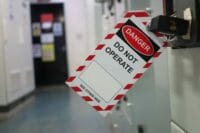
Equipment failure isn’t always the biggest danger in industrial environments. Often, the real risk emerges when machines are shut down—during maintenance, repair, or servicing. Without proper safeguards, residual energy can turn a routine task into a life-altering incident. That’s where lockout tagout (LOTO) procedures come in. But having a LOTO program isn’t enough. If the procedures aren’t clearly written, specific to the equipment, and accessible to workers, they’re just paperwork.
Writing effective lockout tagout procedures isn’t about ticking a regulatory box. It’s about creating a step-by-step defense against electrocution, crushing, burns, and unexpected startup. Done right, these documents become the backbone of a functional safety culture. Done poorly, they expose workers—and organizations—to preventable harm and liability.
This guide breaks down how to write LOTO procedures that actually work—procedures that technicians can follow without confusion and that hold up under OSHA inspection.
Understand What Makes a LOTO Procedure Legally Compliant
OSHA’s standard 29 CFR 1910.147 sets the baseline for lockout tagout in general industry. To comply, your written procedures must:
- Identify the type and source of hazardous energy (electrical, hydraulic, pneumatic, chemical, thermal, etc.)
- List specific actions required to isolate and control that energy
- Name the authorized employee responsible for implementing the procedure
- Include verification steps to confirm zero energy state
A common mistake is creating generic procedures that apply “across machine types.” OSHA requires procedures to be equipment-specific. A lathe, a conveyor system, and a hydraulic press each have distinct energy sources and isolation points—so each needs its own LOTO document.
- For example: A packaging line might have lockout points at the main disconnect, pneumatic shutoff valve, and motor starter. A poorly written procedure might say, “Turn off power and lock out the machine.” A compliant one details:
- Locate the main 480V disconnect (Panel B-3, north wall).
- Open disconnect and verify de-energization using a voltage tester.
- Isolate pneumatic supply via valve V-204; bleed line pressure.
- Apply personal lock and tag to both disconnect and valve.
Compliance isn’t about volume—it’s about precision.
Break Down the 6 Essential Elements of a LOTO Procedure
Every effective LOTO procedure includes these core components. Omitting any one undermines its usefulness and compliance status.
#### 1. Equipment Identification Clearly name the machine and its location. Use both generic and specific identifiers: > Hydraulic Press Model HP-2000 (Line 4, West Bay, Production Floor)
Include photos or diagrams if available. A visual prevents confusion, especially in facilities with similar equipment.
#### 2. Energy Source Inventory List every energy source tied to the machine. For each, specify isolation method: - Electrical: Circuit breaker #CB-412 - Hydraulic: Valve HV-8 - Pneumatic: Shut-off at manifold M-3 - Gravity: Secure moving arm with support pins
This section prevents missed energy—like forgetting that a press stores energy in hydraulic accumulators even after power is off.
#### 3. Step-by-Step Shutdown Sequence Outline the exact order for de-energizing. Example:
- Notify operations supervisor of planned lockout.
- Stop machine using normal STOP button.
- Open disconnect switch at Panel B-10.
- Close and secure hydraulic isolation valve V-12.
- Open bleed valve to release residual pressure.
- Confirm system is depressurized using pressure gauge PG-7.
This sequence must match actual operation. Never assume workers know “how it’s usually done.”

#### 4. Lock and Tag Application Specify who applies locks, where, and how many. Include: - Use of employee-owned locks only - Tag content: name, date, reason, department - Lock placement at each isolation point
Tags are warnings—but locks are the physical barrier. Make that distinction clear.
#### 5. Verification of Zero Energy This is non-negotiable. The procedure must require positive verification. Example: > Verify no voltage at disconnect using a multimeter rated for 600V CAT III. Test each phase to ground and phase-to-phase.
For mechanical systems: > Attempt to operate machine via control panel. No movement confirms isolation.
Never skip this step—even if the machine “looks off.”
#### 6. Removal and Restart Protocol Define how and when locks can be removed: - Only by the authorized employee who applied them - After confirming all tools are clear and guards reinstalled - Only after notifying affected employees before restart
This prevents premature energizing while someone is still inside the danger zone.
Avoid the Top 4 Writing Mistakes in LOTO Procedures
Even compliant companies make avoidable errors that compromise safety.
#### Mistake 1: Using Passive or Vague Language ❌ “Power should be turned off.” ✅ “Open the main 208V disconnect (CB-203) and place in OFF position.”
Use active voice and imperative mood—like a checklist, not a suggestion.
#### Mistake 2: Assuming Uniform Equipment Two machines with the same model number might have different wiring due to field modifications. Always site-verify before writing.
#### Mistake 3: Skipping Training Integration A procedure is only as good as the worker’s understanding. Link each LOTO document to hands-on training. Include a sign-off section for employee certification.
#### Mistake 4: Failing to Review and Update Equipment changes. Procedures don’t age well. Schedule annual reviews—or immediately after incidents, modifications, or near misses.
One auto parts plant had a LOTO procedure for a robotic welder that didn’t account for a recent control system upgrade. During maintenance, a technician was nearly pinned when a servo reactivated. The root cause? Outdated documentation.
Update frequency should be written into the procedure itself.
Real-World Example: Writing a LOTO Procedure for a Conveyor System
Let’s walk through a real-world case.
Equipment: Belt Conveyor C-12, Packaging Line 3 Hazardous Energies: Electrical (480V motor), Mechanical (belt tension), Gravity (elevated sections)
Procedure Outline:
- Preparation
- - Notify supervisor.
- - Retrieve lockout kit (personal lock, tag, voltage tester).
- Shutdown
- - Press E-Stop at control station CS-12.
- - Confirm belt has stopped moving.
- Isolation
- - Locate motor starter MCC-3B, open disconnect.
- - Isolate air supply to tensioning cylinder at valve AV-12.
- Lock and Tag
- - Apply lock to disconnect handle.
- - Attach tag: “DO NOT OPERATE – Maintenance in Progress – J. Smith, 04/15.”
- Verify Zero Energy
- - Test for voltage at starter terminals.
- - Attempt to restart using control panel—no response confirms isolation.
- Perform Maintenance
- - Only after verification.
- Restore Service
- - Remove tools and personnel.
- - Reinstall guards.
- - Remove lock and tag.
- - Notify team before restarting.
This isn’t theoretical. This is what keeps workers safe during a belt replacement or motor repair.
How to Structure and Store LOTO Procedures for Maximum Usability
A procedure buried in a binder or locked in a PDF won’t protect anyone.
Best practices:
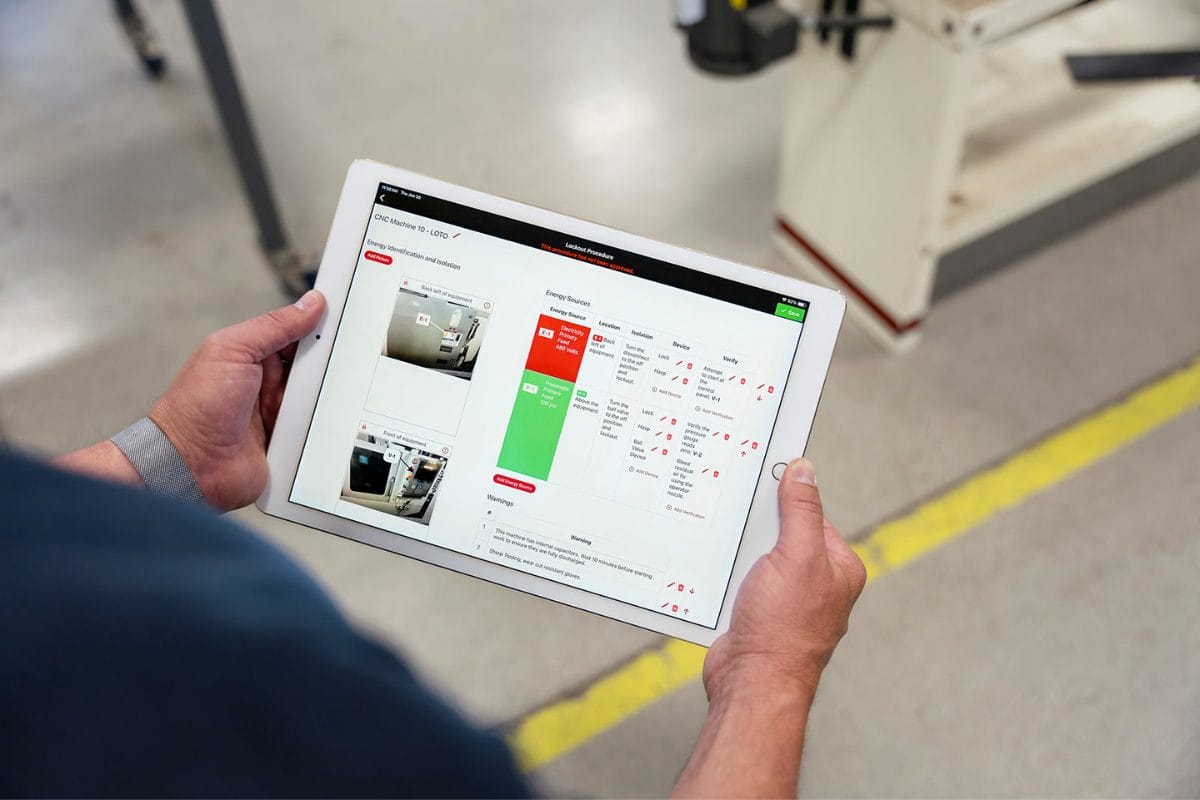
- Format: Use bullet points, numbered steps, bold headers. Avoid dense paragraphs.
- Language: Use simple, technical English—avoid jargon unless defined.
- Accessibility: Keep printed copies near equipment or use QR codes on machines that link to digital versions.
- Version Control: Include revision date and approval signature.
One food processing facility uses laminated, wall-mounted LOTO cards at each machine. Each card includes photos of lock points and a tear-off training verification section. It’s fast, visual, and compliant.
Digital platforms are rising—but only if they’re reliable. If the system crashes, the LOTO procedure must still be available.
Common Gaps in LOTO Programs—and How to Fix Them
Many companies think they’re compliant until an audit or incident reveals flaws.
| Gap | Risk | Solution |
|---|---|---|
| Group lockout not defined | Multiple workers on one machine | Designate primary authorized employee; use hasp and group lockbox |
| Contractors not covered | Outside technicians bypass procedure | Include contractor LOTO policy and verification in onboarding |
| No periodic inspection | Drift from actual practice | Conduct annual audits with employee walkthroughs |
| Tags used without locks | False sense of security | Train: tag is warning; lock is control. Never tag alone. |
OSHA requires documented inspections at least annually. Use them not just to check boxes—but to improve.
Finalize, Train, and Enforce: The Last Step No One Talks About
Writing the procedure is only 60% of the work.
Next: - Train every authorized and affected employee on the document. - Observe them performing the LOTO using the procedure. - Certify their understanding with a signed acknowledgment. - Audit every 12 months—watch a real employee follow the steps.
A procedure that isn’t trained is just a document. A trained procedure becomes a behavior.
And leadership matters. If supervisors pressure workers to “just fix it quick,” safety culture erodes. The tone starts at the top.
Write lockout tagout procedures like lives depend on them—because they do. Be specific. Be clear. Be relentless about updates. A well-written LOTO procedure isn’t just compliance. It’s a promise: that when a worker opens a panel or climbs into a machine, they’re not gambling with their safety.
Start today: pick one machine, write its LOTO from scratch, walk through it with a technician, and refine it. Then repeat. That’s how real safety programs grow.
FAQ
What’s the difference between lockout and tagout? Lockout uses a physical lock to prevent energizing a machine; tagout uses a warning tag. Lockout is preferred. Tagout alone is only acceptable when locks can’t be used—and requires additional safety measures.
Who should write LOTO procedures? Authorized employees familiar with the equipment, ideally with input from maintenance technicians, engineers, and safety officers.
Can one LOTO procedure cover multiple machines? Only if they are identical in energy sources and isolation methods. In most cases, each machine needs a unique procedure.
How detailed should the steps be? Detailed enough that a trained employee can follow them without asking questions. Include exact locations, tools needed, and verification methods.
Do I need to include photos in LOTO procedures? Not required, but highly recommended. Visuals reduce confusion and improve accuracy, especially for new workers.
What happens if a LOTO procedure isn’t followed? Risk of serious injury or death. OSHA can issue citations of $15,000+ per violation. Civil liability may also follow.
How often should LOTO procedures be reviewed? At a minimum, annually—or immediately after an incident, near miss, equipment modification, or change in operations.
FAQ
What should you look for in How to Write Effective Lockout Tagout Procedures? Focus on relevance, practical value, and how well the solution matches real user intent.
Is How to Write Effective Lockout Tagout Procedures suitable for beginners? That depends on the workflow, but a clear step-by-step approach usually makes it easier to start.
How do you compare options around How to Write Effective Lockout Tagout Procedures? Compare features, trust signals, limitations, pricing, and ease of implementation.
What mistakes should you avoid? Avoid generic choices, weak validation, and decisions based only on marketing claims.
What is the next best step? Shortlist the most relevant options, validate them quickly, and refine from real-world results.